


Low Testosterone and Libido: What’s the Connection?
- Gerald Fisher
- 2 hours ago
- 4 min read
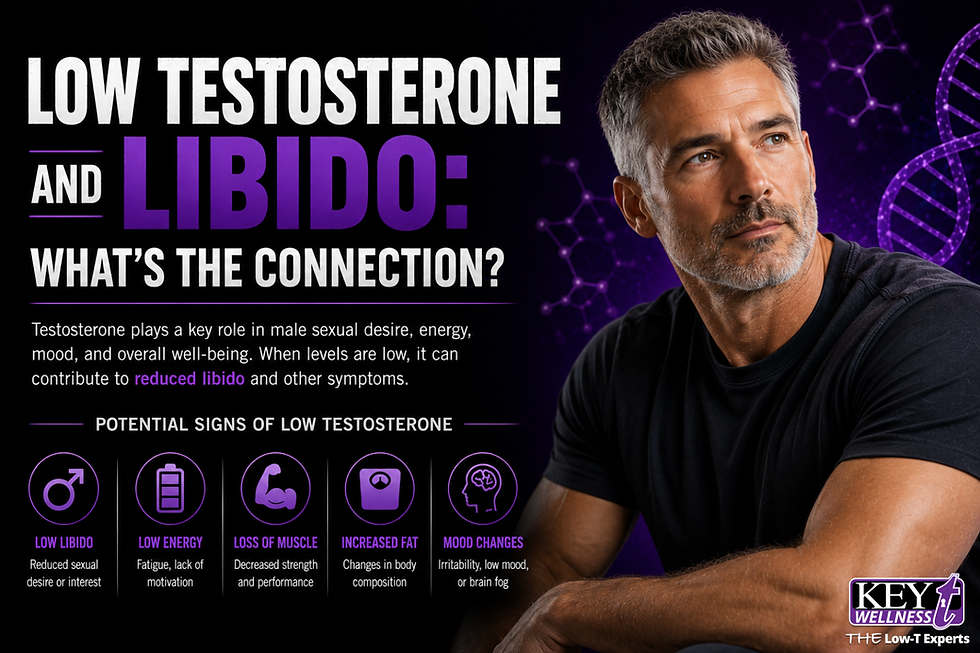
Low Testosterone and Libido
A noticeable decline in sex drive can be frustrating, especially when there is no obvious explanation. While libido naturally varies throughout life, consistently low sexual desire can sometimes be connected to hormonal changes—including low testosterone.
Understanding the relationship between low testosterone and libido can help men recognize when changes in sexual wellness may warrant a conversation with a healthcare provider. Testosterone therapy may be an option for some men with symptoms and clinically confirmed low testosterone.
Are You Ready For a Free Consultation? Book an Appointment Now!
How Are Testosterone and Libido Connected?
Testosterone is an important hormone involved in male sexual health. Among its many functions, testosterone contributes to sexual desire, energy, mood, muscle maintenance, and overall well-being.
When testosterone levels become abnormally low, some men may experience a reduction in sexual interest or desire.
This connection is why low testosterone and low libido are frequently discussed together. However, testosterone is only one factor that can influence sex drive.
What Does Low Libido Mean?
Low libido generally refers to a persistent reduction in sexual desire or interest.
A man's sex drive can fluctuate temporarily because of stress, poor sleep, relationship changes, illness, or other circumstances. A persistent or unexplained change may be worth discussing with a healthcare provider.
Men experiencing low libido may notice:
Less interest in sexual activity
Fewer sexual thoughts
Reduced desire for intimacy
Changes in spontaneous sexual interest
A noticeable difference from their normal sex drive
The important consideration is often whether the change represents a meaningful departure from what is normal for that individual.
Can Low Testosterone Cause Low Libido?
Yes, testosterone deficiency can contribute to reduced libido in some men.
Testosterone plays an important role in sexual desire, which means low testosterone and libido can be closely connected. Low libido is also one of the symptoms healthcare providers may consider when evaluating someone for testosterone deficiency.
However, experiencing low libido does not automatically mean testosterone is low.
Proper evaluation is important because several physical, psychological, lifestyle, and medication-related factors can affect sexual desire.
Other Signs of Low Testosterone
Changes in libido may occur alongside other symptoms.
Potential symptoms associated with low testosterone can include:
Low Energy
Some men notice persistent fatigue or decreased energy.
Changes in Muscle Mass
Testosterone contributes to maintaining muscle mass and strength.
Increased Body Fat
Hormonal changes may accompany changes in body composition.
Mood Changes
Some individuals may experience changes in mood, motivation, or general sense of well-being.
Reduced Physical Performance
Changes in strength, endurance, or recovery may also lead someone to investigate their hormone health.
When several symptoms occur together, discussing testosterone testing with a healthcare provider may be appropriate.
Low Libido and Erectile Dysfunction Are Not the Same
One important distinction is that libido and erectile function are different.
Libido describes sexual desire.
Erectile dysfunction refers to difficulty achieving or maintaining an erection sufficient for sexual activity.
A man can have a strong libido while experiencing erectile dysfunction. Likewise, someone can have normal erectile function but little interest in sexual activity.
This distinction matters when determining what may be contributing to changes in sexual wellness.
What Else Can Cause Low Libido in Men?
Testosterone isn't the only factor affecting sexual desire.
Other potential contributors can include:
Chronic stress
Poor sleep
Relationship difficulties
Depression or anxiety
Certain medications
Other hormonal changes
Chronic health conditions
Excessive alcohol consumption
Lifestyle factors
Because there are numerous potential causes, symptoms alone aren't enough to diagnose low testosterone.
How Is Low Testosterone Diagnosed?
Evaluating testosterone deficiency generally involves more than simply checking whether someone has low libido.
A healthcare provider may review:
Current symptoms
Medical history
Medications
Lifestyle factors
Sexual health concerns
Laboratory results
Testosterone levels are typically measured with blood testing, and abnormal results may need to be confirmed with additional testing.
This helps determine whether symptoms are actually associated with testosterone deficiency or whether another factor should be investigated.
Can Testosterone Therapy Help Low Libido?
For men who have symptoms of testosterone deficiency and clinically confirmed low testosterone, testosterone therapy may be considered under medical supervision.
Potential treatment goals can include addressing symptoms associated with testosterone deficiency, including sexual symptoms.
However, testosterone therapy isn't appropriate simply because someone wants to increase their sex drive. Determining whether treatment is appropriate requires an individualized medical evaluation.
Testosterone Therapy Is a Personalized Treatment
Hormone optimization isn't a one-size-fits-all process.
Before recommending testosterone therapy, a healthcare provider can evaluate hormone levels, symptoms, health history, and individual wellness goals.
When treatment is appropriate, ongoing medical monitoring is also important to evaluate response and manage potential risks.
Supporting Libido Beyond Testosterone
Sexual wellness is connected to overall wellness.
Even when hormones are involved, healthy lifestyle habits remain important. These can include:
Getting consistent, quality sleep
Exercising regularly
Maintaining a balanced diet
Managing stress
Maintaining a healthy body composition
Addressing relationship or emotional concerns
Discussing medication side effects with a healthcare provider
Looking at the complete picture can help identify factors contributing to changes in libido.
Are You Ready For a Free Consultation? Book an Appointment Now!
Learn More About Low Testosterone and Libido
The connection between low testosterone and libido is important, but low testosterone is only one potential explanation for changes in sexual desire.
If you're experiencing low testosterone and low libido, a professional evaluation can help determine whether hormones or another factor may be contributing to your symptoms.
Key T Wellness provides personalized wellness consultations focused on testosterone therapy, hormone optimization, men's wellness, sexual health, and healthy aging.
Schedule a Consultation to learn more about your hormone health and whether testosterone therapy may be appropriate for your individual needs.


Comments